Early Signs of IBD: Symptoms, When to See a Doctor & How It's Diagnosed
The early signs of IBD are easy to miss because they come and go. Here's what to watch for, when to see a doctor, and how Crohn's and ulcerative colitis are diagnosed.
When it comes to your gut, listening to your body is one of the most useful things you can do. Inflammatory bowel disease (IBD) — which includes Crohn's disease and ulcerative colitis — often starts quietly, so the early signs are easy to brush off as a bad week or something you ate. But catching them early can mean a faster diagnosis, more treatment options, and less lasting damage. Here's what to watch for, when to see a doctor, and how IBD is actually diagnosed.
What are the early signs of IBD?
IBD usually comes on gradually. The early signs include persistent or recurring diarrhea, blood in the stool, ongoing abdominal pain or cramping, unexplained weight loss, and constant fatigue — and sometimes mouth ulcers or the low iron (anemia) that can come from inflammation and blood loss. These symptoms tend to come and go, which is part of why IBD is so easy to miss at first.
For a fuller picture of how each symptom feels and how Crohn's and ulcerative colitis differ, see our guide to the common symptoms of IBD.
Why the early signs are easy to miss
Early IBD can be subtle. Symptoms are often mild at first and build slowly, and because they flare and then settle, it's tempting to assume each episode has passed for good. They also overlap with far more common problems like a stomach bug or irritable bowel syndrome (IBS), so they're easily underestimated — and some people have relatively "silent" disease without obvious symptoms early on. Occasionally the first clue shows up outside the gut entirely: joint pain, a red or painful eye (uveitis), or a skin rash can appear before any digestive trouble.
When should you see a doctor?
Ongoing gut symptoms don't automatically mean IBD, but they're worth checking out — especially when they last or keep coming back. Make an appointment with a doctor if you have:
Diarrhea that lasts more than a week or keeps returning (especially if it wakes you at night)
Blood in your stool
Abdominal pain or cramping that won't settle
Unexplained weight loss
Constant fatigue or low energy
A fever that lasts more than a couple of days
New joint pain, skin rashes, or eye irritation
Slowed growth or delayed puberty in a child or teen
Get urgent care if symptoms come on suddenly or are severe — intense abdominal pain, a high fever, heavy rectal bleeding, or signs of dehydration like dizziness and dark urine.
Why catching IBD early matters
IBD is a long-term condition, and inflammation that goes untreated can cause lasting damage — narrowed segments of bowel (strictures), tunnels between the bowel and other tissue (fistulas), poor nutrient absorption and malnutrition, and in some cases a need for surgery. Over many years, long-standing inflammation in the colon also raises the risk of colon cancer, which is why ongoing care and monitoring matter. Research shows many people wait months — sometimes more than a year — between their first symptoms and a diagnosis, and treating IBD earlier gives the best chance to bring it under control before that kind of damage sets in.
How is IBD diagnosed?
There's no single test for IBD. A doctor pieces it together from your history, a physical exam, and a few tests that look for inflammation and rule out other causes:
Blood tests — checking for anemia and markers of inflammation such as C-reactive protein (CRP).
Stool tests — including fecal calprotectin, a marker of inflammation inside the intestine that also helps tell IBD apart from IBS, plus tests to rule out infection.
Colonoscopy with biopsy — the key test. A thin camera examines the lining of the colon and the end of the small intestine, and tiny tissue samples (biopsies) confirm inflammation and help distinguish Crohn's disease from ulcerative colitis.
Imaging — CT or MRI scans (including enterography) to see parts of the small bowel a scope can't reach and to check for complications.
Because Crohn's can affect stretches of the small intestine a standard scope can't reach, your doctor may also use capsule endoscopy — a swallowable camera about the size of a pill that takes pictures as it passes through.
Track your symptoms before your appointment
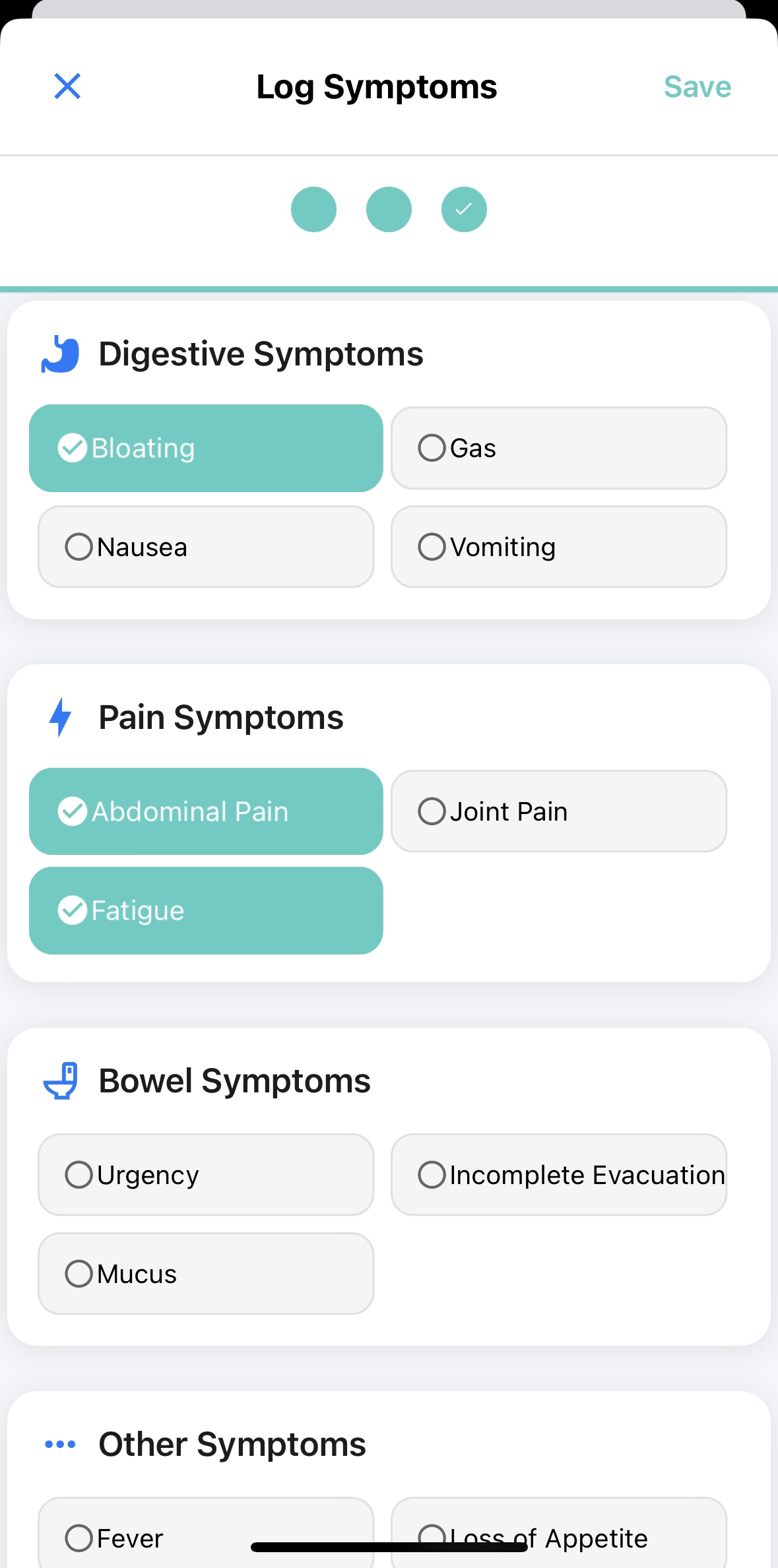
Because IBD symptoms come and go, the details are easy to forget by the time you're in the exam room — and a clear history helps your doctor reach a diagnosis faster. Keeping a simple log of your bowel movements, any blood, pain, energy levels, food, and how often symptoms strike gives your care team something concrete to work from. FlareCare lets you record bowel movements with the Bristol Stool Scale and symptoms, then turn them into a report for your appointment. If you're still making sense of your symptoms, our guide to what your poop is telling you is a good place to start.
Frequently Asked Questions
How long does it take to get diagnosed with IBD?
It varies. Because IBD symptoms overlap with other gut problems, many people wait months — and sometimes more than a year — between their first symptoms and a diagnosis. Bringing a clear symptom history to your appointment can help speed things up.
Can IBD go unnoticed for a while?
Yes. Early symptoms can be mild or come and go, and some people have relatively "silent" disease. Occasionally the first sign appears outside the gut — such as joint pain or eye inflammation — before any digestive symptoms show up.
Can a blood or stool test diagnose IBD?
Not on their own. Blood tests (for anemia and inflammation) and stool tests (such as fecal calprotectin) point to inflammation and help rule out other causes, but a colonoscopy with biopsy is usually needed to confirm IBD and tell Crohn's from ulcerative colitis.
Should I see my doctor or go to the ER?
Book a regular appointment for ongoing symptoms like recurring diarrhea, blood in the stool, or unexplained weight loss. Seek emergency care for severe abdominal pain, heavy or non-stop rectal bleeding, a high fever, or signs of dehydration.
Sources: this article draws on patient-education materials from the Crohn's & Colitis Foundation, NIDDK (NIH), the NHS, the Cleveland Clinic, and the Mayo Clinic. It's for general education, not medical advice — please talk to a healthcare professional about your own symptoms.
Turn this into your own data.
Reading about gut health helps. Tracking your own patterns — meals, symptoms, bowel movements — is what actually shows you what's going on.

Stay Updated
Get the latest gut health tips and research delivered straight to your inbox.
By subscribing, you agree to receive our newsletter. You can unsubscribe at any time.
Keep reading

Symptoms
Common Symptoms of IBD (Crohn's & Ulcerative Colitis)
Diarrhea, urgency, blood, fatigue, weight loss — the common symptoms of inflammatory bowel disease, how Crohn's and ulcerative colitis differ, and the warning signs that mean it's time to see a doctor.
Read
What Your Doctor Wishes You Logged Before an Appointment
Preparing for a gastroenterology appointment can feel overwhelming — especially when you’re living with IBD or IBS. The good news? A few simple logs can make your visit more productive. From bowel habits to food triggers, stress, and meds, here’s exactly what your doctor wishes you tracked — and how FlareCare makes it easy.
Read
FlareCare
The Gut Health Tracker You Didn’t Know You Needed: How FlareCare Helps You Manage IBD, IBS, and Chronic Digestive Symptoms
Tired of guessing what’s triggering your gut issues? FlareCare is an all-in-one symptom tracker built for IBD, IBS, and anyone with digestive struggles. With AI-powered insights and easy logging tools, you can finally connect the dots and take control of your gut health.
Read