Poop 101: What’s Normal, What’s Not, and What Your Poop Is Telling You
Green? Yellow? Five times a day? Here's what your poop could be telling you — and when it's time to pay attention to your gut health.
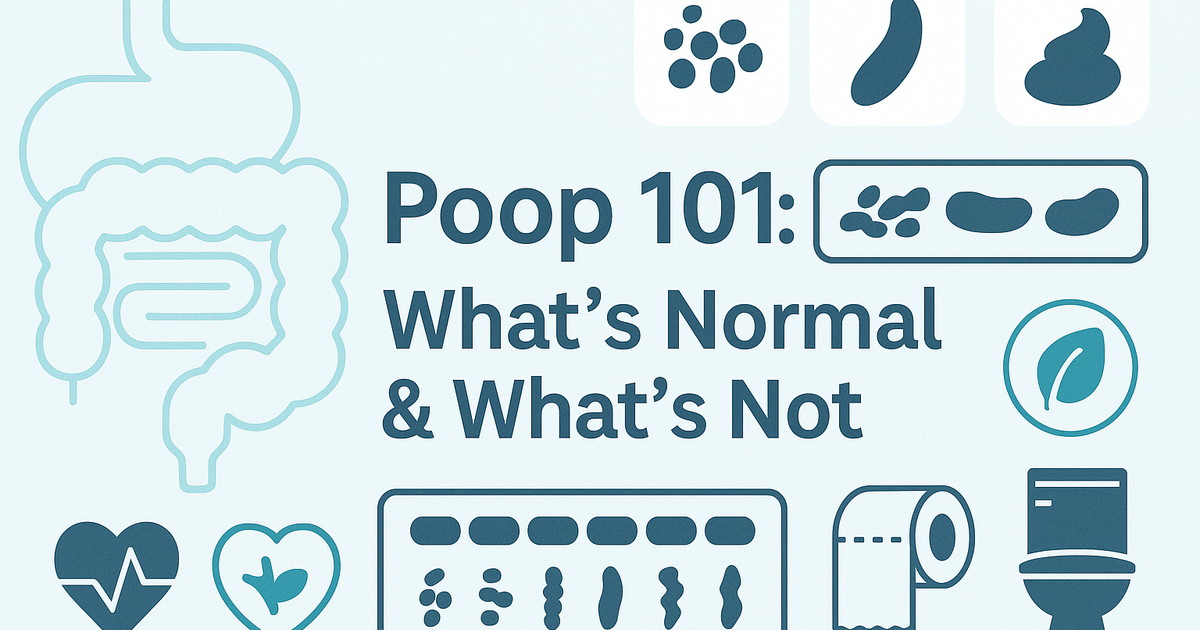
Let’s face it — no one really wants to talk about poop, but everyone has questions about it. And for good reason: your bathroom habits can tell you a lot about your gut health.
Whether you’re dealing with IBD, IBS, or just occasional digestive drama, understanding what’s normal (and what’s not) can help you spot early signs of inflammation, food issues, or just a gut that needs some TLC.
We’ve pulled together some of the most-searched poop questions and answered them with clarity, a little humor, and zero judgment. Let’s dive in — because your poop has a lot to say.
Is Pooping 5 Times a Day Normal?
Yes — pooping five times a day can be normal for some people. A healthy range runs from about three times a week to three times a day, so five can fit your rhythm if stools are soft, formed, and pass comfortably, especially with a high-fiber diet or a fast metabolism.
Most people poop between three times a week and three times a day, which is considered a healthy range. If you're going five times a day, and the stool is soft, formed, and passes comfortably, it might just be your body’s normal rhythm — especially if you eat a high-fiber diet or have a fast metabolism.
That said, if this is new for you — or if it comes with:
Cramping or bloating
A sense of urgency
Loose stools
Fatigue or weight loss
…it could point to something more, like IBS, IBD, or a food sensitivity.
Tracking your frequency in FlareCare can help spot patterns over time and give you something concrete to bring to your doctor if needed.
Why Is My Poop Green?
Green poop is usually harmless. It most often comes from leafy greens like spinach or kale, green food dyes, iron supplements, or food moving through your gut quickly before bile fully breaks it down. If you otherwise feel fine, it rarely signals a problem — watch it only if it persists with discomfort.
Green poop usually isn’t a cause for concern. It’s most commonly linked to:
Leafy greens (think spinach or kale smoothies)
Green food dyes in candy, cereals, or drinks
Iron supplements
Fast-moving digestion (when bile doesn’t have time to break down)
If your stool is green but you're feeling fine, it's probably nothing to worry about. But if it sticks around and comes with discomfort, fatigue, or greasy texture, you might want to investigate further.
What Do Different Poop Colors Mean?
Poop color reflects diet and digestion. Brown is healthy and typical; green comes from greens or fast transit; yellow can mean poor fat absorption; black may signal iron or GI bleeding; red can be beets or bleeding; pale may signal a bile or liver issue. Persistent red, black, or pale stool should be checked.
Let’s break it down:
Poop color | What it can mean |
|---|---|
Brown | The gold standard — healthy and typical |
Green | From greens or bile moving too fast |
Yellow | Poor fat absorption, especially if greasy |
Black | Iron supplements or GI bleeding |
Red | Beets — or bleeding in the lower digestive tract |
White or pale | Possible bile duct blockage or liver issue |
⚠️ Red, black, or pale stool — especially if it persists — should always be checked by a medical professional.
How Often Should You Poop?
There’s no single right number. Anywhere from three times a week to three times a day is considered normal. What matters more than frequency is how you feel — if pooping is routine, pain-free, and complete, you’re likely fine. A lasting change from your own baseline is the signal worth tracking.
There’s a wide range of normal — from three times a week to three times a day.
What matters more than the number is how you feel. If pooping feels routine, pain-free, and complete, you're probably in the clear.
Your poop schedule can change based on:
Stress
Diet (hello fiber and hydration)
Hormonal shifts
Travel, illness, or medication
If your routine changes drastically, or you alternate between constipation and diarrhea often, it’s worth tracking and talking to your doctor.
What Does a Healthy Poop Look Like?
A healthy poop is usually medium to light brown, smooth and sausage-shaped, and passes easily without pain or straining, leaving you feeling fully emptied. Stool that’s oily, ribbon-like, unusually smelly, or frequently floating can point to inflammation or trouble absorbing nutrients, and is worth tracking over time.
A “healthy” poop typically:
Is medium to light brown
Has a smooth, sausage-like shape
Passes easily without pain or straining
Feels like a complete release (no lingering urgency)
If your stool is oily, ribbon-like, unusually smelly, or floats often — that could be a sign of inflammation or nutrient absorption issues.
FlareCare lets you log shape, texture, urgency, and more to help you build a full picture of your gut’s behavior over time.
What Is the Bristol Stool Scale?
The Bristol Stool Scale is a medical chart that sorts poop into seven types, from hard separate lumps (Type 1) to entirely liquid (Type 7), with Types 3–4 considered ideal. It gives you and your doctor a shared, objective way to describe constipation, diarrhea, or normal digestion.
Type | Description | What It Might Mean |
|---|---|---|
1 | Hard, separate lumps | Severe constipation |
2 | Lumpy sausage | Mild constipation |
3 | Cracked sausage | Slightly firm, but normal |
4 | Smooth sausage | Ideal poop |
5 | Soft blobs | Possibly low fiber |
6 | Mushy, ragged edges | Mild diarrhea or irritation |
7 | Watery, no solid pieces | Severe diarrhea |
You can log Bristol types in FlareCare to better understand your trends and share data easily with your doctor.
Want to Track Your Poop Like a Pro?
Your poop can say a lot — and FlareCare helps you actually hear it.
Our app makes it easy (and yes, kind of satisfying) to track:
Bowel movements (with Bristol types)
Color, urgency, and frequency
Food, symptoms, and emotions
Patterns with AI-generated insights
Doctor-ready health reports
You deserve tools that work with your body — not guesswork.
Frequently Asked Questions
Q: What color is healthy poop?
A: Medium brown. It means your bile is breaking down properly and digestion is doing its job.
Q: Is pooping 5 times a day okay?
A: For some people, yes — especially with high-fiber diets. If it’s new or comes with symptoms, track and talk to your doctor.
Q: Why is my poop yellow and greasy?
A: It could mean poor fat absorption — often linked to gallbladder issues or food intolerances.
Q: Is green poop something to worry about?
A: Not usually. It’s common with leafy greens or fast digestion. If it’s persistent or paired with symptoms, it’s worth tracking.
Q: What is the Bristol Stool Scale?
A: A simple chart that classifies stool by shape and consistency — it helps you and your doctor understand your gut's rhythm.
Turn this into your own data.
Reading about gut health helps. Tracking your own patterns — meals, symptoms, bowel movements — is what actually shows you what's going on.

Stay Updated
Get the latest gut health tips and research delivered straight to your inbox.
By subscribing, you agree to receive our newsletter. You can unsubscribe at any time.
Keep reading

Gut Health
Why a Bowel Movement Tracker Can Change Your Life with IBD
Tracking your bowel movements may seem simple, but it can dramatically improve how you manage Crohn’s or colitis. Learn how the FlareCare app helps you log symptoms, spot flares early, and take control of your gut health.
Read
Gut Health
Top 10 Gut Health Tracker Apps for IBD, IBS & Crohn’s in 2025
Wondering which gut health app actually works for IBD, Crohn’s, or IBS? This guide breaks down 2025’s top 10 trackers—features, pros, cons, and why FlareCare leads the pack.
Read
Gut Health
Why Drinking Water Is Essential for Gut Health
Water might be the simplest gut health hack you’re overlooking. From smoother digestion to a stronger gut lining, here’s why hydration matters more than you think.
Read